Adopting a Global Perspective to Seize Development Opportunities—Jinergy Builds a Quality Highland in the PV Industry by Adhering to First-class Standards
Jinneng Clean Energy Technology Ltd. (hereinafter referred to as “Jinergy”) has consistently upheld the principle that “quality is the lifeline of the enterprise” throughout its development. Relying on the internationally aligned management system, precise end-to-end control, and robust technical testing capabilities, the company has established a quality assurance system that covers the entire product lifecycle, providing a vivid practical model for high-quality development in the clean energy industry.
Jinergy has established a three-dimensional quality control framework to achieve in-depth alignment with world-class standards. At the certification level, the company has deeply integrated five major international standards --- ISO9001、ISO14001、ISO45001、ISO/IEC17025、SA8000 --- embedding international standard requirements precisely into every link of production and operations to create a framework for the collaborative management of quality, environment, safety and social responsibility. Meanwhile, a scientific quality management system has been established, with nearly a thousand regulatory documents covering the entire product lifecycle from R&D, production, and testing to after-sales service. Clear specification are set for everything from the testing accuracy standards of raw material wafers to the approval procedures for production process adjustments, ensuring standardized and rule-based quality management.
Authoritative certifications serve as the “passport” for products entering global markets. Jinergy has not only obtained domestic mainstream certifications such as TÜV and CGC, but also secured market access qualifications for main global markets including India BIS, Brazil Listing and Japan JPAC, laying a solid foundation for product exports. In 2024, its mainstream TOPCon PV modules passed enhanced reliability tests by Kiwa and PVEL, with module power degradation rates maintaining a low industry level, and were awarded “Best Performer” certification.
Jinergy has innovatively implemented end-to-end quality control, starting with source verification upon the arrival of raw materials. In incoming material inspections for cells---including silicon wafer flatness and electrical parameters---, for modules --- covering cell photovoltaic conversion efficiency and hidden crack detection, the cross-linking degree of encapsulation films, and mechanical strength of frames--- all of which undergo comprehensive testing in accordance with incoming inspection procedures. Once any non-conforming raw materials is detected, a strict inspection mechanism is immediately triggered until the product fully meets standards, thereby eliminating quality risk at the source.
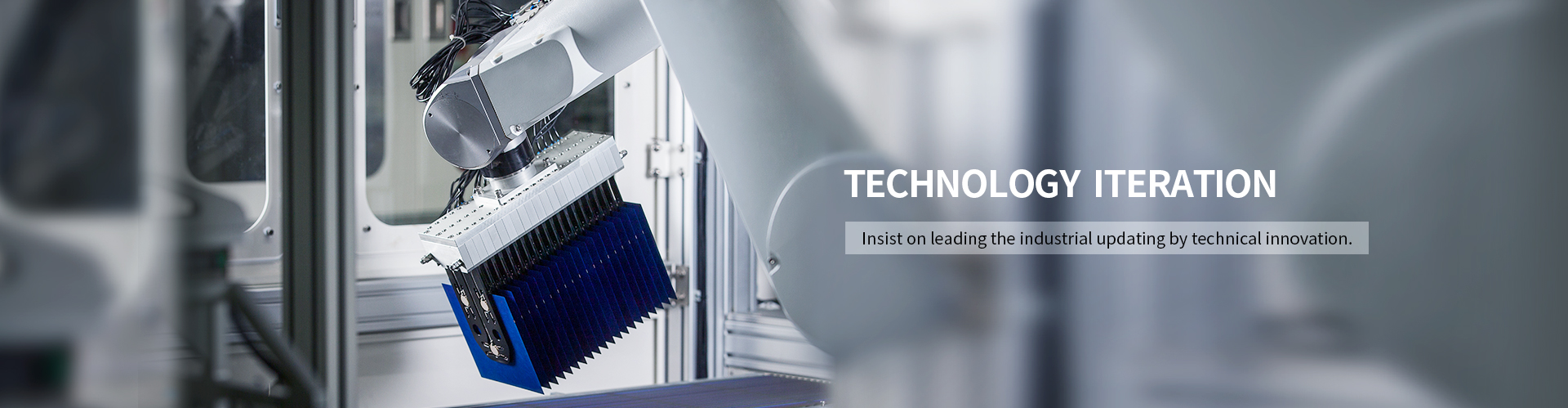
Technical control during production phase is even more rigorous. Class 1000 clean rooms are equipped with constant temperature and humidity control systems to minimize environmental interference with quality. Specifically, TOPCon cell workshop has adopted 5G Internet of Things technology, while the module production workshop achieves end-to-end automation from cell cutting and string welding to lamination and encapsulation. On the production line, EL (Electroluminescence) testing equipment powered by AI algorithms can accurately identify hidden cracks and poor soldering of cells; AOI (Automated Optical Inspection) equipment verifies cell layout and film coverage before lamination; and real time monitoring of equipment data through CPK (Process Capability Index) at critical process ensures production stability. Finished products undergo dual quality checks at both warehousing and shipping stages: appearance, dimensions and performance are checked upon storage, and a re-inspection before shipment, forming a closed-loop quality assurance system from production completion to delivery, ensuring zero-defect products. Supported by the MES (Manufacturing Execution System) and ERP (Enterprise Resource Planning System), each module is assigned a unique identification barcode, enabling full traceability of raw material sources, process parameters, and testing data throughout the entire production process.
Jinergy operates a CNAS-accredited national-level PV module laboratory equipped with advanced facilities including hail impact testers, dynamic mechanical load testers and UV aging test chambers. The testing scope covers safety, mechanical and electrical and other fields, with capabilities exceeding the TÜV PV module type certification standards. With robust experimental technology, the company solidifies module reliability and provides adaptable solutions for diverse and extreme environments around the world.
Jinergy laboratory conducts multi-dimensional tests such as thermal cycling, humidity-freeze cycling, and ±2400 Pa mechanical load testing, combined with precise PID detection, to verify modules’ environmental durability. Following strict systematic testing, the high-efficiency bifacial PV modules supplied by the company to the Qinling Station in Antarctica have successfully withstood extreme conditions including -55 ℃ extreme cold, 50 m/s strong winds, and 6000 Pa snow loads, while enduring the challenges of intense UV radiation during the polar day and low temperatures during the polar night. Through experimental optimization technologies such as the bifacial dual glass structure, the modules achieve efficient and stable power generation in polar region. This not only validates the products’ ultra-wide operating range but also demonstrates the company’s robust strength through double endorsement of “laboratory testing and real-world application in extreme scenarios”.
For Jinergy, product delivery is not the end of service, but rather the beginning of long-term support. The company offers extended warranty commitments and has established a professional technical team to provide installation guidance, operation and maintenance training, and troubleshooting services throughout the project lifecycle. Even if the product has exceeded its reasonable service life, we still provides maintenance assistance to ensure proper management of modules across their entire lifecycle. In addition, if there are any problems with the system, the company provides comprehensive after-sales support. Our technical team rushes to the site immediately, responds promptly to customer needs, and efficiently resolves problems with professional expertise.
From internationally aligned system certifications to precise end-to-end process control, and from extreme testing in laboratories to extended-term customer service guarantees, Jinergy firmly upholds quality standards admit fierce low-price competition in the industry. It continuously improves product quality and service standards, striving to provide customers with higher-quality and more efficient photovoltaic solutions. Going forward, Jinergy will continue to deepen quality control and technological innovation, steadily leading the way on the path of high-quality development.
